
Power and heatHow-to6 sources
Power Outage in a Winter Storm: What to Do, Hour by Hour
What to do when a winter storm knocks out the power: keeping food safe, staying warm without heat, light, a weather radio and carbon monoxide safety.
We earn from qualifying purchases through links on this page. How we make money.
Quick reference5 facts
| Fridge, door closed | Food stays safe for up to 4 hours (USDA FSIS) |
|---|---|
| Full freezer | About 48 hours, or 24 hours if half full (USDA FSIS) |
| Throw out | Food that reached 40°F or higher for two hours or more (Ready.gov) |
| Never for heat | A gas stove or oven (Ready.gov) |
| Generator | Outdoors only, at least 20 feet from the house (CPSC) |
On this page (5 sections)
When a winter storm cuts the power, keep the fridge and freezer closed, switch to flashlights, dress in layers and close off rooms you are not using. Never heat the house with a gas stove or oven, and run a generator outdoors only, 20 feet or more from the house. A closed fridge keeps food safe about 4 hours.
The full storm plan, from watches and warnings to the car kit, is on our winter storm preparedness hub. This page covers the hours after the lights go out.
What should you do first when the power goes out?
Work through these in the first few minutes:
- Close the fridge and freezer and keep them closed.
- Unplug appliances and electronics. Ready.gov says power can come back with surges or spikes that damage them.
- Switch to flashlights. CPSC says to use flashlights or battery-operated candles instead of candles.
- Check the carbon monoxide alarms. They need a battery or battery backup to work in an outage.
- Turn on a battery or hand crank radio for local news and alerts.
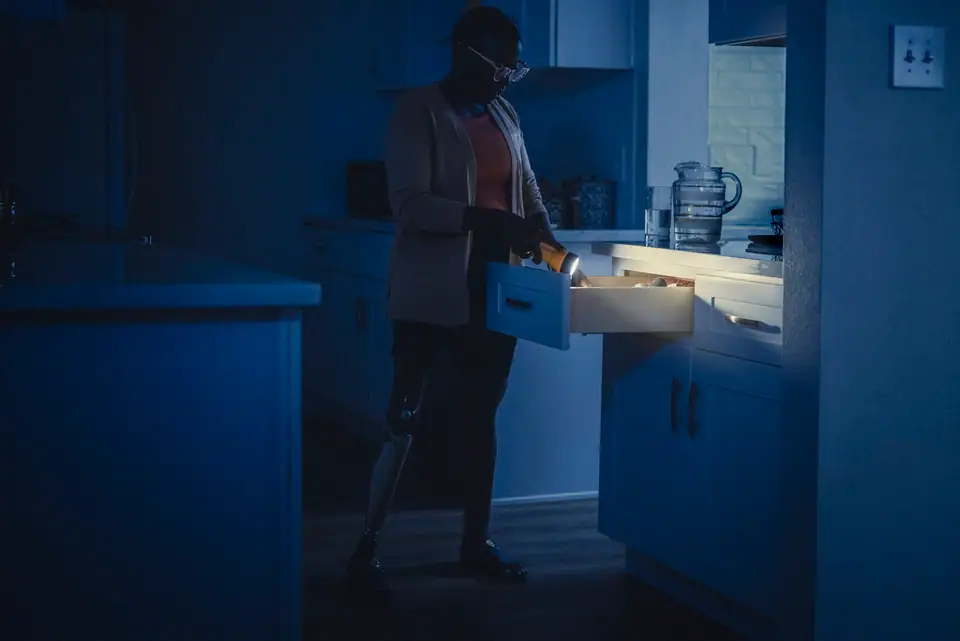
Ready.gov’s advice is a flashlight for every household member, plus a portable charger or power bank for phones. If anyone relies on a powered medical device or refrigerated medicine, Ready.gov says to have a plan with the medical provider before the storm.
How long will food stay safe without power?
USDA’s Food Safety and Inspection Service (FSIS) gives clear numbers, as long as the doors stay shut.
| Appliance | How long food stays safe | What to do next |
|---|---|---|
| Refrigerator, door closed | Up to 4 hours | Move perishables to a cooler with ice or frozen gel packs, at 40°F or below |
| Full freezer | About 48 hours | Add dry ice or block ice for a long outage |
| Half-full freezer | About 24 hours | Group packages together so they stay cold longer |
Two winter-specific rules from FSIS are worth knowing. First, do not put perishable food out in the snow: outside temperatures vary and animals can reach it. Instead, fill buckets or empty milk jugs with water, leave them outside to freeze and use that ice inside. Second, if you use dry ice, never touch it with bare hands or put it directly on food.
An appliance thermometer in both the fridge and the freezer takes the guesswork out. FSIS says the fridge should read 40°F or below and the freezer 0°F or below.
What to throw out afterward
FSIS’s rule is simple: never taste food to decide whether it is safe. When in doubt, throw it out. After more than 4 hours without power, it lists raw and cooked meat, poultry, fish, eggs, milk, soft cheeses, leftovers and cut fruit among the foods to discard. Hard cheese, butter, whole fruit and bread are usually fine. Ready.gov adds one more line: throw away food that has been at 40°F or higher for two hours or more.
Frozen food is more forgiving. FSIS says food that still has ice crystals, or stayed at 40°F or below, can be refrozen, although the quality may suffer.
How do you stay warm when the heat goes out?
The National Weather Service gives a short list for power outages:
- Wear layers of loose-fitting, lightweight, warm clothing, plus hats, mittens and blankets.
- Close blinds or curtains to keep in some heat.
- Close off rooms you are not using.
- Put towels or rags in the cracks under doors.
If the cold becomes extreme, Ready.gov says to go to a community location with power and to check with local officials about warming centers near you. Once your own household is safe, the NWS suggests checking on neighbors, especially anyone older or living alone.
Carbon monoxide
Ready.gov says never to heat your home with a gas stovetop or oven. Run a generator outdoors only, at least 20 feet from the house with the exhaust pointed away, as CPSC directs, and never in a garage, even with the door open. If a CO alarm sounds, CPSC says to get outside immediately, then call 911. Our carbon monoxide safety guide covers alarm placement.
For backup heat, read space heaters in a power outage first: an electric heater needs a power source big enough to carry it. Battery-heated layers are another route, covered in our guide to heated jackets, vests and gloves. If you plan to run a generator, portable generators for winter outages covers sizing and placement. Cold rooms also put plumbing at risk, so see how to prevent frozen pipes.
Which radio keeps you informed when the power is out?
A NOAA Weather Radio carries National Weather Service alerts around the clock, and it keeps working when the internet and cell service do not. The NWS receiver guide lists three features to look for:
- A tone alarm. The NWS sends a 1050 Hz tone before most warnings, which wakes the radio up.
- SAME coding, so you only hear alerts for the counties you choose.
- Battery backup, since power outages often happen during storms.
Radios carrying the Public Alert logo meet a set of technical standards and include many of these features. A hand crank model adds a way to charge it without batteries.
NOAA weather radios with tone alert and battery backup
Live listings, shown by eBay
Opens eBay in a new tab. Check condition, seller feedback and returns.
What should you do when the power comes back?
- Plug appliances back in one at a time.
- Check the fridge and freezer thermometers before you decide what to keep.
- Ready.gov says that if the power was out for more than a day, throw away medication that should be refrigerated unless its label says otherwise, and call your doctor or pharmacist for a new supply.
- Restock flashlight batteries, ice packs and water before the next storm.
The rest of the before, during and after checklist is on our winter storm preparedness hub.
Frequently asked questions
How long is food safe in the fridge when the power goes out?
Up to 4 hours if you keep the door closed, according to USDA FSIS. A full freezer holds its temperature for about 48 hours, or about 24 hours if it is half full.
Can I keep food outside in the snow during a power outage?
No. USDA FSIS says not to put perishable food out in the snow, because outside temperatures vary and animals and dirt can reach it. Instead, fill buckets or empty milk jugs with water, let them freeze outside and use that ice in the fridge, freezer or a cooler.
Can I refreeze food that thawed in an outage?
USDA FSIS says thawed food that still has ice crystals, or that stayed at 40°F or below, can be refrozen, though its quality may suffer. Never taste food to decide whether it is safe.
How do I keep a house warm without power?
The National Weather Service says to wear loose layers, hats and mittens, close blinds and curtains, close off rooms you are not using and put towels in the cracks under doors. Ready.gov says to go to a community location with power if the cold is extreme.
Is it safe to use candles when the power is out?
CPSC says to use flashlights or battery-operated candles instead. If you do burn candles, keep them away from anything that can catch fire and put them out before you leave the room or go to sleep.
Sources
- Keep Your Food Safe During Emergencies: Power Outages, Floods and Fires (last updated Aug 7, 2013)USDA Food Safety and Inspection Service
- Power Outages (last updated June 4, 2026)Ready.gov (FEMA)
- Winter Weather (last updated March 10, 2026)Ready.gov (FEMA)
- During Extremely Cold WeatherNational Weather Service
- NWR ReceiversNational Weather Service
- As Winter Storms Threaten Millions in the U.S., CPSC Issues Safety Tips to Help Families Prevent Carbon Monoxide Poisoning and Fires (December 12, 2025)U.S. Consumer Product Safety Commission
Filed under Power and heatPart of Winter Storm Preparedness: Gear for Home, Car and Power Outages