
Power and heatAnswer12 sources
Carbon Monoxide Detectors and Generator Safety in a Winter Storm
Where to put CO alarms, the symptoms of carbon monoxide poisoning and how far a generator must be from your home, taken from CPSC, CDC and NFPA guidance.
We may earn a commission when you buy through links on this page. Listings and prices come from our partners and change often. How we make money.
Quick reference5 facts, sourced below
| Alarm placement (CPSC) | Battery or battery-backup CO alarms on every level of the home and outside sleeping areas |
|---|---|
| Generator distance (CPSC) | Outside only, at least 20 feet from the house, exhaust directed away |
| Testing (NFPA) | Test CO alarms at least once a month; replace them per the maker's instructions |
| Symptoms (CDC) | Headache, dizziness, weakness, upset stomach, vomiting, chest pain and confusion |
| Generator CO deaths (CPSC) | An average of about 100 a year in the U.S. from portable generators |
On this page (7 sections)
- What is carbon monoxide, and why is it a winter storm risk?
- What are the symptoms of carbon monoxide poisoning?
- Where should carbon monoxide detectors be placed?
- What kind of CO alarm should you buy?
- How far should a generator be from the house?
- Can a car cause carbon monoxide poisoning in a snowstorm?
- Which other storm habits cause carbon monoxide problems?
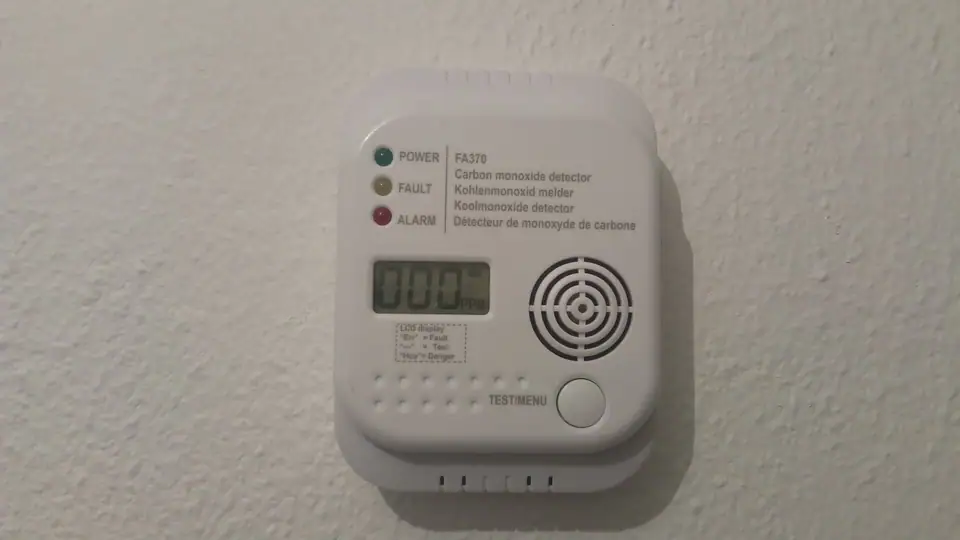
Put a battery-operated or battery-backup carbon monoxide alarm on every level of your home and outside each sleeping area. CPSC and NFPA both advise this. Run a portable generator outdoors only, at least 20 feet from the house with the exhaust pointed away, per CPSC. If an alarm sounds, get outside first, then call 911.
What is carbon monoxide, and why is it a winter storm risk?
The CDC describes carbon monoxide (CO) as an odorless, colorless gas that kills without warning. NFPA explains that it forms when fuels burn incompletely, from gasoline and wood to natural gas and propane.
Winter storms stack up the sources. Power goes out, so people start generators and fuel-burning heaters. Snow piles against vents and tailpipes. In a December 2025 release, CPSC said an average of about 100 consumers die in the U.S. each year from CO poisoning linked to portable generators.
What are the symptoms of carbon monoxide poisoning?
The CDC lists the most common symptoms as headache, dizziness, weakness, upset stomach, vomiting, chest pain and confusion. CPSC’s list adds nausea and sleepiness.
The CDC says infants and older adults are more likely to get sick from CO, along with people who have chronic heart disease, anemia or breathing problems. It also warns that people who are asleep or under the influence of substances can die from CO before they have symptoms. That is why an alarm matters more than noticing symptoms.
What to do if you suspect CO poisoning
CPSC’s instruction is short: get outside immediately, then call 911. NFPA adds three steps:
- Move to fresh air outdoors or by an open window or door.
- Make sure everyone inside the home is accounted for.
- Call for help from the fresh air location and stay there until emergency personnel arrive.
Where should carbon monoxide detectors be placed?
The official sources agree on the basics: every level of the home, and outside the places people sleep. Each adds a detail.
| Source | Where it says to install CO alarms | Extra detail |
|---|---|---|
| CPSC | On every level of the home and outside sleeping areas | Battery-operated or battery backup; interconnected alarms are best |
| NFPA | Central location outside each sleeping area, on every level, and wherever codes require | Follow the maker’s placement and mounting height |
| CDC | Near every sleeping area | Battery-operated or battery backup |
| American Red Cross | Central locations on every level and outside sleeping areas | Test batteries frequently |
| Ready.gov | On every level of your home | Install and test detectors with battery backups |
NFPA says to interconnect all CO alarms for the best protection, so when one sounds, they all sound. CPSC calls interconnected alarms the best option too.
Mounting height is the one question these sources leave to the maker. NFPA’s advice is to follow the manufacturer’s instructions for placement and mounting height, so read the manual before you drill.
What kind of CO alarm should you buy?
Battery power is the key feature for storm season, because a plug-in alarm without a backup goes quiet in an outage. CPSC recommends battery-operated alarms or alarms with battery backup.
Look for proof of testing. NFPA says to choose a CO alarm with the label of a recognized testing laboratory. CPSC’s generator safety alert says CO alarms should be certified to the latest safety standards, naming UL 2034, IAS 6-96 and CSA 6.19.01.
Then keep it working:
- Test monthly. CPSC and NFPA both say to test CO alarms once a month.
- Check batteries twice a year. The CDC suggests doing it when you change your clocks each spring and fall.
- Know the trouble signal. NFPA says that if the trouble signal sounds, check for a low battery and replace it. If it still sounds, call the fire department.
- Replace on schedule. NFPA says to replace alarms according to the manufacturer’s instructions.
NFPA also suggests calling your local fire department’s non-emergency number ahead of time to find out what number to call if the alarm sounds.
Battery and battery-backup CO alarms on eBay
Shop the range
Browse current carbon monoxide alarms on eBay, new condition only.
Shop carbon monoxide alarmsOpens eBay in a new tab. Check condition, seller feedback and returns on the listing.
How far should a generator be from the house?
CPSC says to operate portable generators outside only, at least 20 feet away from the house, and to direct the exhaust away from the home and other buildings. Its safety alert also says to keep generators at least 20 feet from doors, windows and vents that could let CO indoors.
Other agencies say the same thing in their own words. The CDC says to use generators outside, more than 20 feet away from any windows, doors and vents. Ready.gov says at least 20 feet away from windows, doors and attached garages.
CPSC lists the places a portable generator must never run: inside a home, garage, basement, crawlspace, shed or on a porch. Its safety alert adds that deadly CO can build up in those spaces even when fans are running or doors and windows are open, and can linger for hours after the generator shuts off.
Carbon monoxide
Should a generator have a CO shut-off?
CPSC recommends models with a carbon monoxide shut-off safety feature, which it says automatically turns the generator off when dangerous CO levels build nearby. In a May 2026 release, CPSC said models certified to PGMA G300-2023 and UL 2201-2023 include CO safety technologies, and that UL 2201 models also have reduced CO emissions.
Our guide to portable generators for winter outages covers sizing and fuel storage, plus safe cord use.
Can a car cause carbon monoxide poisoning in a snowstorm?
Yes. NFPA’s CO safety tips cover it directly:
- If you need to warm a vehicle, take it out of the garage immediately after starting it.
- Do not run a vehicle or other fueled engine indoors, even if the garage door is open.
- Make sure the exhaust pipe of a running vehicle is not covered with snow.
The CDC gives the same garage warning: never run a car or truck inside a garage attached to a house, even with the garage door open. If you might get stuck on the road, our winter car emergency kit guide covers what to keep in the car.
Which other storm habits cause carbon monoxide problems?
Blocked vents. NFPA says that during and after a snowstorm, you should make sure vents for the dryer, furnace, stove and fireplace are clear of snow.
Using the kitchen for heat. Ready.gov says never to use a gas stovetop or oven to heat your home.
Grills and camp stoves. NFPA says gas and charcoal grills produce CO and belong outside only. The American Red Cross includes camp stoves and other propane, natural gas or charcoal-burning devices in its list of things never to use inside a home, garage, basement or crawlspace.
Heaters and chimneys. NFPA’s heating tip sheet says all fuel-burning equipment should be vented to the outside, and that heating equipment and chimneys should be cleaned and inspected every year by a qualified professional. Our page on space heaters in a power outage covers electric heaters and indoor-rated propane heaters.
For the full storm checklist, start with our winter storm preparedness guide.
Frequently asked questions
Where is the best place to put a carbon monoxide detector?
NFPA says to install CO alarms in a central location outside each sleeping area and on every level of the home, plus anywhere local laws or codes require. It also says to follow the manufacturer's instructions for placement and mounting height.
How far should a generator be from the house?
CPSC says to run a portable generator outside only, at least 20 feet away from the house, with the exhaust directed away from the home and other buildings. Its safety alert also says to keep it at least 20 feet from doors, windows and vents.
Can I run a generator in the garage with the door open?
No. CPSC says never to use a portable generator inside a home or garage, even if doors and windows are open. The American Red Cross adds that opening doors and windows or using fans will not prevent CO buildup.
What should I do if my carbon monoxide alarm goes off?
CPSC says to get outside immediately, then call 911. NFPA says to move to fresh air outdoors or by an open window or door, make sure everyone is accounted for, and stay there until emergency personnel arrive.
How often should I test a CO alarm?
CPSC and NFPA both say to test CO alarms monthly. CDC suggests checking the batteries when you change your clocks each spring and fall, and NFPA says to replace the alarm according to the manufacturer's instructions.
Sources
- Carbon Monoxide Poisoning BasicsCenters for Disease Control and Prevention
- Prevent Carbon Monoxide Poisoning (Natural Disasters PSA toolkit)Centers for Disease Control and Prevention
- Carbon Monoxide Information CenterU.S. Consumer Product Safety Commission
- What to Know About Generators and Carbon Monoxide (CO)U.S. Consumer Product Safety Commission
- Portable Generator Hazards (safety alert)U.S. Consumer Product Safety Commission
- As Winter Storms Threaten Millions in the U.S., CPSC Issues Safety Tips to Help Families Prevent Carbon Monoxide Poisoning and FiresU.S. Consumer Product Safety Commission
- CPSC Warns of Generator, Carbon Monoxide and Fire Hazards Ahead of Hurricane SeasonU.S. Consumer Product Safety Commission
- Carbon Monoxide SafetyNational Fire Protection Association
- Heating Safety tip sheetNational Fire Protection Association
- Power OutagesReady.gov (FEMA)
- Winter WeatherReady.gov (FEMA)
- Safe Generator UseAmerican Red Cross
Filed under Power and heatPart of Winter Storm Preparedness: Gear for Home, Car and Power Outages