
Snow and iceFix10 sources
Roof Rakes and Ice Dams: How to Clear Roof Snow From the Ground
Why ice dams form, how to prevent them step by step, how to use a roof rake from the ground, what heat cables can and cannot do, and when to call a pro.
We may earn a commission when you buy through links on this page. Listings and prices come from our partners and change often. How we make money.
Quick reference4 facts, sourced below
| Root cause (Building Science Corp.) | The upper roof is warmer than the eaves, so meltwater refreezes at the edge |
|---|---|
| Snow to leave on the roof (FEMA) | At least 2 inches; scraping a roof bare can damage the roof covering |
| Attic insulation (NWS Grand Rapids) | At least R-30, with R-38 preferable in northern climates |
| Roof heat cable (EasyHeat ADKS) | Made to stop new ice dams, not to melt snow and ice already on the roof |
On this page (8 sections)
- What causes ice dams? A quick checklist
- How do you prevent ice dams, step by step?
- How do you use a roof rake safely from the ground?
- What should you look for in a roof rake?
- Do roof heat cables prevent ice dams?
- What should you never do about an ice dam?
- When should you call a professional?
- What else helps with snow at ground level?
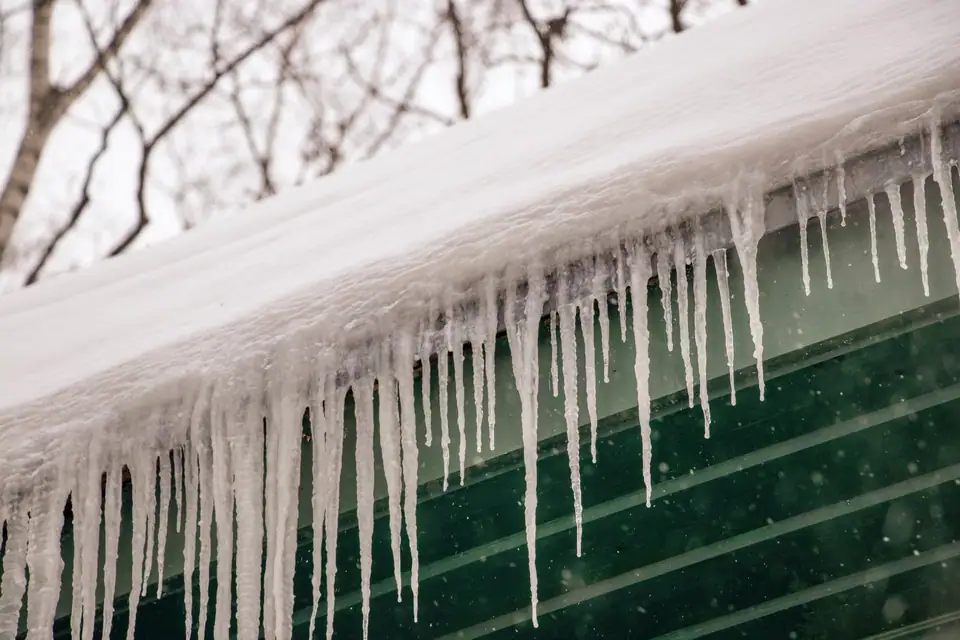
Ice dams form when heat from the house melts roof snow and the water refreezes at the colder eaves. The quick fix is to pull snow off the lower roof with a roof rake while you stand on the ground. The lasting fix is to seal attic air leaks, add insulation and ventilate the attic so the roof stays cold.
What causes ice dams? A quick checklist
John Straube of Building Science Corporation sums up the problem as a roof whose upper part is warmer than the lower part. Snow melts on the warm section, runs down, and freezes again when it reaches the cold overhang. His digest lists four usual culprits:
- Not enough insulation, or framing that bridges heat through it.
- Warm air leaking from the house into the space under the roof.
- Heat sources in the attic, such as poorly insulated ducts or hot-water piping.
- Uneven snow and sun, where drifts and solar warming melt some areas faster.
Is your roof at risk?
NDSU Extension offers a simple test. Snow on a heated house should look like snow on an unheated, detached garage, with only a little melt around the edges. FEMA’s Snow Load Safety Guide names two harms. Ice at the eave stops snow from sliding off, which loads the roof unevenly. The bigger risk, it says, is water getting into the building.
How do you prevent ice dams, step by step?
Work from the outside in: clear the path for water first, then fix the heat that causes the melt.
- Clean the gutters in fall. NWS Grand Rapids says to remove leaves, sticks and other debris from gutters and downspouts before winter.
- Keep them clear all winter. The same page says to keep gutters and downspouts free of snow and icicles.
- Rake the lower roof after heavy snow. NWS Grand Rapids notes that keeping heavy snow off the roof lowers the chance of both ice dams and roof failure.
- Seal attic air leaks. Straube writes that careful attention to detail is essentially the only solution to air leakage. NDSU Extension frames ice dams as a sign that a house is leaking heat.
- Add insulation. NWS Grand Rapids recommends attic insulation of at least R-30, with R-38 preferable in northern climates.
- Ventilate the attic. The same page says good airflow through the eaves and roof vents keeps attic air cold enough to limit the freeze and thaw cycle. A University of Minnesota Extension fact sheet adds that insulation alone will not prevent ice dams without ventilation.
Steps 4 to 6 usually mean attic work. NWS Grand Rapids suggests a reputable roofing or insulation contractor for those upgrades.
How do you use a roof rake safely from the ground?
A roof rake is a wide blade on a long, telescoping pole. NWS Grand Rapids describes it as a tool that lets you stand on the ground and pull snow off the roof. FEMA agrees that removal can be done from the ground, which removes the risk to people on a hazardous roof.
FEMA’s guide sets out how to do it without harming the roof or yourself:
- Leave at least 2 inches of snow on the roof. Scraping it bare can seriously damage the roof covering and cause leaks.
- Use a non-metallic rake head where possible. FEMA says metal rakes can damage roofing material.
- Skip sharp tools such as picks.
- Stay back from the eave. Roof snow can slide at any moment.
- Watch for icicles knocked loose; one falling from a short height can still cause injury.
- Have someone keep foot traffic away from where snow and ice will fall.
Look up before you rake
What should you look for in a roof rake?
Reach comes first. Measure from where you will stand to the lower few feet of roof above the eave, then pick a pole that reaches it from the ground.
As one example, Snow Joe’s manual for its RJ204M lists a telescoping aluminum handle that extends from 6.2 to 21 feet, a polycarbonate blade with a 25-inch clearing width, and a weight of 4.8 pounds. That pairs a plastic head, which fits FEMA’s advice, with a metal pole, which is why the power line check matters.
When comparing other rakes, check the blade material first: FEMA favors non-metallic heads.
New telescoping roof rakes and roof de-icing cable on eBay
Shop the range
Browse current roof rakes on eBay, new condition only.
Shop roof rakesOpens eBay in a new tab. Check condition, seller feedback and returns on the listing.
Do roof heat cables prevent ice dams?
Roof heat cables are electric heating cables clipped along the roof edge and run through gutters and downspouts. EasyHeat says its ADKS cable is made to stop ice dams forming on inclined roofs with tab shingles, in gutters and in downspouts. Its catalog also sets limits worth reading before you buy any brand:
| EasyHeat ADKS instruction | What it means |
|---|---|
| Not for melting existing snow and ice | Install before the season, not during an ice dam |
| Never on a flat roof or combustible materials | Roof type matters |
| Not suitable for metal roofs | Check your roofing first |
| Always use ground-fault protection | NEC and CEC require it to reduce fire risk from a damaged cable |
CPSC adds a rule for the gutter side of the job: do not use heat tapes designed for water pipes on gutters. Pipe tape is a different product, covered in our guide to preventing frozen pipes.
Cables also have a known weakness. The University of Minnesota fact sheet says their melting reaches only a few inches from the wire, the sawtooth melt can create secondary ice dams higher up, and they use a great deal of energy. Treat them as a supplement to insulation and ventilation.
What should you never do about an ice dam?
The University of Minnesota fact sheet says never to chop through the ice down to the shingles or use a blowtorch. Do not climb onto a snowy roof, either. FEMA recommends that anyone who needs snow removed from the roof itself hire a licensed, insured roofing contractor with roof snow experience.
When should you call a professional?
FEMA lists warning signs that a roof is overstressed by snow. Those that apply to houses include:
- Sagging roof members or ceilings.
- Popping, cracking or creaking noises.
- Doors or windows that can no longer open or close.
- Cracked or split wood members, or cracks in walls or masonry.
- Severe roof leaks.
If you see any of them, FEMA says to leave the building promptly and have a qualified design professional, such as a Professional Engineer, inspect it.
What else helps with snow at ground level?
The rake handles the roof. For the driveway and walks, see our snow shovel guide, or compare single-stage vs two-stage snow blowers for bigger storms. The rest of the storm checklist is in our winter storm preparedness guide.
Frequently asked questions
Does raking snow off the roof prevent ice dams?
It helps in the short term. The National Weather Service in Grand Rapids says keeping heavy snow off the roof reduces the chance of ice dams, and suggests a roof rake used from the ground. Lasting prevention comes from air sealing, insulation and attic ventilation.
How much snow should you leave on the roof?
FEMA's Snow Load Safety Guide says to leave at least 2 inches. Removing snow completely can seriously damage the roof covering and lead to leaks.
Should you chip or chop an ice dam off the roof?
No. A University of Minnesota Extension fact sheet says never to chop through the ice down to the shingles or use a blowtorch, and FEMA advises against sharp tools such as picks. Leave stubborn ice to a roofing contractor.
Do heat cables stop ice dams?
They are sold to prevent new ice dams, not to clear old ones. EasyHeat says its ADKS cable should not be used to melt snow and ice already on the roof, and a University of Minnesota fact sheet notes that cables melt only a few inches around the wire.
Is it safe to use a metal roof rake near power lines?
Keep any pole well away from them. CPSC says to keep all objects, including poles, ladders and tools, far away from power lines at all times, and to assume contact with any line can be lethal.
Sources
- BSD-135: Ice DamsBuilding Science Corporation
- Preventing Roof Ice DamsNational Weather Service, Grand Rapids
- Check Your Roof for Ice DamsNDSU Extension
- Preventing Ice-Dams on Minnesota Homes (Forestry Fact Sheet No. 12)University of Minnesota Agricultural Extension Service
- Snow Load Safety Guide (FEMA P-957)Federal Emergency Management Agency
- CPSC Alerts Consumers To Electrocution Hazards From Overhead Power LinesU.S. Consumer Product Safety Commission
- CPSC Re-Issues Heat Tape Guidelines In Wake Of Zoo FireU.S. Consumer Product Safety Commission
- EasyHeat ADKS Cable: Roof and Gutter De-IcingEmerson (EasyHeat)
- Roofer Joe 21-Foot Twist-n-Lock Telescoping Snow Shovel Roof Rake (RJ204M)Snow Joe
- RJ204M Operator's ManualSnow Joe
Filed under Snow and icePart of Winter Storm Preparedness: Gear for Home, Car and Power Outages