
Stay warmAnswer8 sources
Fleece-Lined Pants vs Insulated Snow Pants: Which for Cold Days?
When fleece-lined softshell pants are warm enough, when you need insulated waterproof snow pants, and which pair suits hiking, shoveling or skiing.
We earn from qualifying purchases through links on this page. How we make money.
Quick reference4 facts
| Fleece-lined softshell | Cold, mostly dry days when you are moving; water resistant, not waterproof (Stio) |
|---|---|
| Insulated snow pants | Wet or deep snow and long stops in the cold |
| Wind chill | At -19°F, exposed skin can freeze in 30 minutes (NWS) |
| Skip | Cotton, including jeans and sweatpants, which loses its warmth when wet (WTA) |
On this page (3 sections)
Choose fleece-lined softshell pants for cold, mostly dry days when you keep moving: hikes, dog walks, shoveling and commutes. Choose insulated waterproof snow pants for wet or deep snow, sledding and long waits in the cold. In wind or below freezing, add a base layer under either pair.
Already set on fleece-lined pants? Our guide to choosing fleece-lined hiking pants covers lining weight, inseam and hems. The rest of a cold-weather plan is on our winter storm preparedness hub.
How do the three kinds of winter pants compare?
Fleece-lined pants sit between two other options.
| Type | Unlined hiking pants plus a base layer | Fleece-lined softshell pants | Insulated waterproof snow pants |
|---|---|---|---|
| Warmth | Adjustable: add or remove the base layer | Built in, fixed | Highest of the three |
| Water | Varies by fabric | Water resistant (DWR finish) | Waterproof |
| Best for | Changing conditions, hard effort | Cold, mostly dry days | Wet snow, deep snow, long stops in the cold |
| Main limit | Two pieces to manage | Wet conditions | Bulk and heat on the move |
Stio’s guide to softshell pants describes the fabric as soft, stretchy and more breathable than a hard shell. It is water and wind resistant with a durable water repellent (DWR) coating, and less effective in heavy rain or wet conditions.
The Washington Trails Association (WTA) adds one rule for every column: avoid cotton. Cotton loses its warmth when wet and dries slowly, and WTA names sweatpants, jeans and flannel. Fleece-lined jeans are still jeans.
How warm are fleece-lined pants?
Warm enough for a cold, dry day at a walking pace, in most cases. Past that, it depends on the lining, the wind and your effort.
A temperature on a product page is the maker’s own claim, not a standard rating. Moosehill lists the 280 GSM fabric in its men’s SnowVenture M007 for warmth above 0°C (32°F), while its page for the SnowVenture M041 claims warmth as low as -30°F. When two figures from one maker disagree that much, plan your layers around the cautious one.
Wind matters as much as the thermometer. The National Weather Service (NWS) explains that at a temperature of 0°F with a 15 mph wind, the wind chill is -19°F, and exposed skin can freeze in 30 minutes. A wind-resistant softshell outer helps here.
The NWS advice is to dress in layers, cover exposed skin and change into dry clothing right away if you get wet. Ready.gov and the CDC give the same layered advice.
Know the signs of frostbite and hypothermia
The NWS lists redness or pain, a white or grayish-yellow skin area, skin that feels unusually firm or waxy, and numbness as signs of frostbite. Ready.gov lists shivering, exhaustion, confusion, fumbling hands, memory loss, slurred speech and drowsiness as signs of hypothermia, and calls a body temperature below 95°F an emergency.
Which pants suit which winter day?
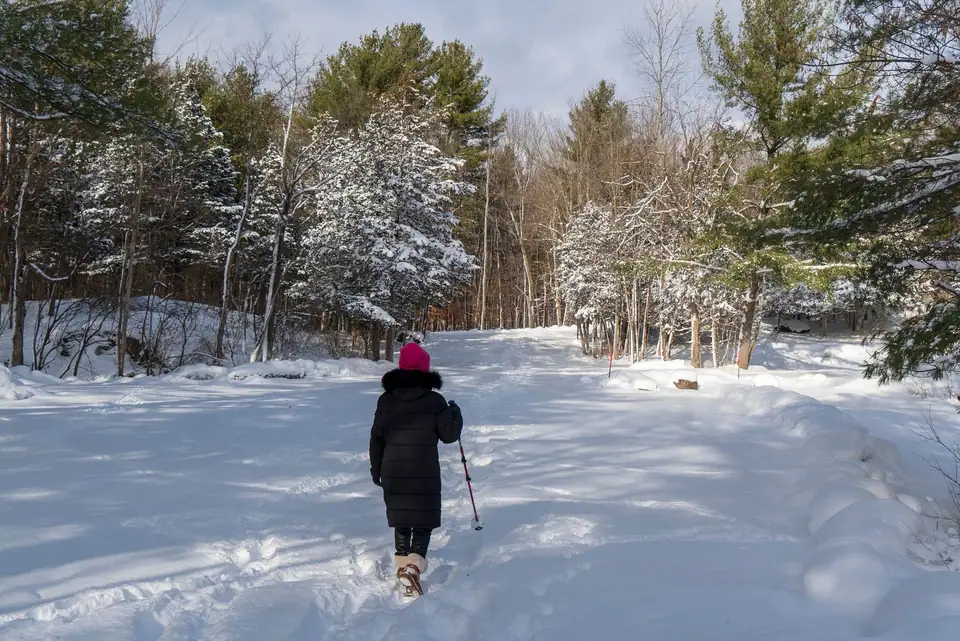
A cold, dry hike or snowshoe. Fleece-lined softshell fits best. The fabric breathes while you move and the lining covers rest stops. Add gaiters if the snow is over the boot top; WTA says waterproof gaiters help keep feet and pants dry.
Shoveling and clearing the car. Short, hard work suits softshell: you heat up fast, and the DWR finish sheds light snow. For pacing the work itself, see the heart advice in our snow shovel guide.
Skiing, sledding and wet snow. Sitting on a wet chairlift or in slush is what softshell handles worst. Stio recommends waterproof or insulated ski pants for heavy snow and wet conditions, and notes that softshell can also go under an insulated hard shell on very cold days.
Commuting and dog walks. Fleece-lined pants are a simple swap for jeans. A tapered or straight leg looks less like ski wear.
Standing still in deep cold. Waiting at a bus stop or watching an outdoor game makes little body heat. Add a base layer, choose insulated snow pants, or look at battery-heated layers in our guide to heated jackets, vests and gloves.
Stuck in a car. Dry spare clothing belongs in a winter car kit. A pair of fleece-lined pants in the trunk covers the legs; our winter car emergency kit guide has the rest of the list.
Fleece-lined and insulated snow pants
Live prices from Moosehill, updated 2 hours ago


Shopping for someone else? Our winter storm gifts guide sorts practical ideas by the person.
Frequently asked questions
Are fleece-lined pants as warm as snow pants?
Usually not. Fleece-lined softshell pants suit cold, dry days when you are moving. Insulated waterproof snow pants are the warmer choice for wet snow, deep snow and long stretches of standing still.
How cold can you wear fleece-lined pants?
It depends on the lining, the wind and how hard you are working. As one example, Moosehill lists its 280 GSM SnowVenture M007 fabric for warmth above 0°C (32°F). Below freezing or in wind, plan on a base layer underneath.
Are fleece-lined pants good for skiing or sledding?
They can work on dry, cold days. For wet snow or long chairlift rides, Stio's guide points to waterproof or insulated ski pants, or a waterproof shell over the softshell layer.
What pants are best for shoveling snow?
Fleece-lined softshell pants suit short, hard work like shoveling: you warm up fast and the water-repellent finish sheds the snow you kick up. Avoid jeans, since cotton loses its warmth when wet.
Sources
- During Extremely Cold WeatherNational Weather Service
- Understanding Wind ChillNational Weather Service
- Winter Weather (last updated March 10, 2026)Ready.gov
- Preventing HypothermiaCenters for Disease Control and Prevention
- What to Wear on a Winter HikeWashington Trails Association
- How to Choose the Perfect Pair of Soft Shell Ski PantsStio
- Men's Snow Ski Hiking Pants: SnowVenture M007Moosehill
- Men's Snow Ski Pants Fleece Lined Waterproof: SnowVenture M041Moosehill
Filed under Stay warmPart of Winter Storm Preparedness: Gear for Home, Car and Power Outages