
On the roadHow-to8 sources
Winter Car Emergency Kit: What to Keep in Your Car for Snow
What to keep in your car for snow and ice, item by item, plus tire chains vs tire socks and what to do if you are stranded in a winter storm.
We earn from qualifying purchases through links on this page. How we make money.
Quick reference4 facts
| If stranded | Stay with the car (NHTSA, Ready.gov) |
|---|---|
| Running the engine | About 10 minutes each hour for heat, exhaust pipe cleared of snow (NWS) |
| Tire tread | At least 2/32 of an inch on all tires (NHTSA) |
| Fuel | Keep the tank close to full whenever possible (NHTSA) |
On this page (6 sections)
A winter car emergency kit should cover two jobs: getting unstuck and staying safe if you are stranded. NHTSA, Ready.gov and the National Weather Service list a shovel, ice scraper, sand or cat litter, jumper cables, a flashlight, blankets, water, food, a first aid kit and a phone charger.
Use the table below as a shopping list, then read what to do if you get stuck. For the rest of your storm plan, start at our winter storm preparedness hub.
What should you keep in a winter car kit?
Four agencies publish winter car lists: NHTSA in its winter driving tips, Ready.gov, the National Weather Service and the CDC. Here is what each one includes.
| Item | NHTSA | Ready.gov | NWS | CDC |
|---|---|---|---|---|
| Snow shovel | Listed | Not listed | Listed | Listed |
| Ice scraper | Listed (plus broom) | Listed | Listed (scraper and brush) | Listed |
| Sand or cat litter for traction | Listed | Listed | Listed | Not listed |
| Jumper or booster cables | Listed | Listed | Listed | Listed |
| Flashlight | Listed | Listed | Listed, with extra batteries | Listed, with extra batteries |
| Blankets | Listed | Listed | Listed (or sleeping bags) | Listed |
| Warm clothes | Not listed | Listed | Listed | Listed (hats, coats, mittens) |
| Water and food | Listed | Listed | Listed (high-calorie food) | Listed |
| First aid kit | Listed | Not listed | Listed | Listed |
| Phone charger | Listed | Listed | Listed | Listed, with portable charger |
| Flares or reflectors | Listed | Listed | Not listed | Listed |
| Maps | Not listed | Listed | Listed, with compass | Not listed |
| Tow rope | Not listed | Not listed | Listed | Not listed |
| Battery-powered radio | Not listed | Not listed | Not listed | Listed |
A few items appear on only one list. The CDC adds any necessary medications and a pocket knife, plus a bright flag or help sign. The NWS adds a tool kit and a water container. NHTSA’s first aid kit note specifically includes a tourniquet.
Which items matter most if you get stuck?
Think of the kit in three groups, because each solves a different problem.
Getting moving again. A shovel clears snow around the tires, and sand or cat litter gives the tires something to grip. NHTSA lists both “in case your vehicle gets stuck in the snow.”
Being found. NHTSA says to put bright markers on the antenna or windows and keep the interior dome light on. The NWS suggests tying a bright colored cloth, preferably red, to your antenna or door. Flares and reflective triangles cover the roadside if you break down in traffic.
Staying warm. Blankets, dry spare clothing, hats and mittens keep you warm without running the engine. A spare pair of fleece-lined pants is one way to cover the legs. Battery-heated gloves or a heated vest can help too; our guide to heated jackets, vests and gloves covers how long their batteries last in the cold.
Tire chains or tire socks: what is the difference?
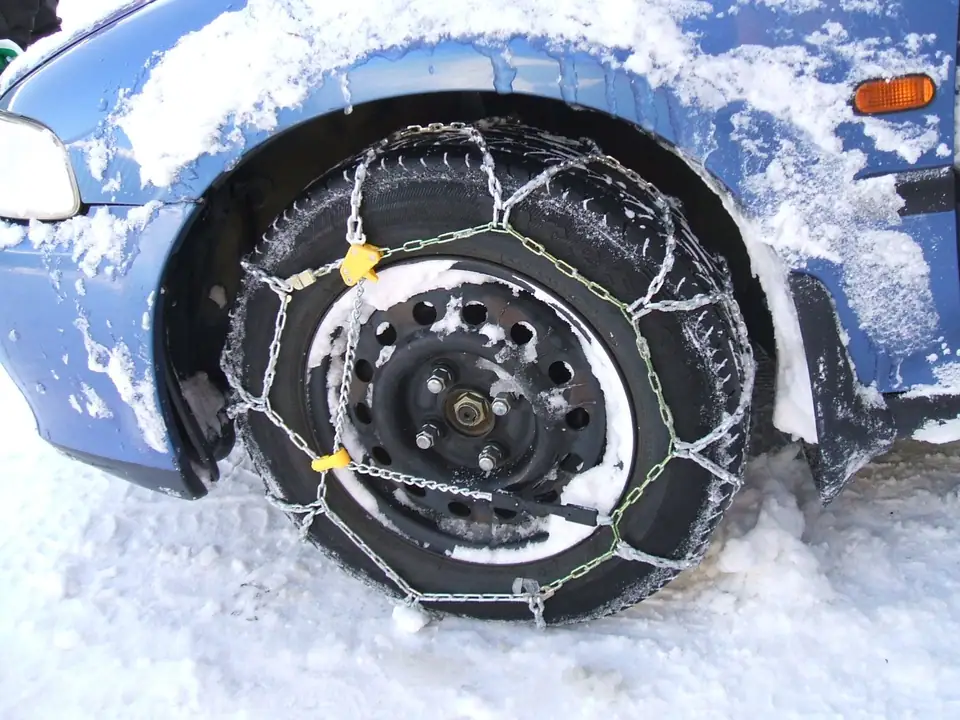
Tire chains are metal links that wrap around the tread. Tire socks are fabric covers that slip over the tire. Both are traction aids for snow, and both come off when roads clear.
The more important question is what your state requires. Ready.gov says to install good winter tires with enough tread, “or any chains or studs required in your local area.” Rules differ by state and by road.
Colorado shows how detailed those rules can get. Its traction law accepts AWD or 4WD vehicles with mud and snow, winter or all-weather rated tires and 3/16-inch tread, or chains or an approved alternative traction device. When Colorado’s passenger vehicle chain law is in effect, every vehicle must have chains or an approved alternative traction device. Before you buy either type, check your own state transportation department’s traction rules and your vehicle owner’s manual.
What should you do if you are stranded in your car?
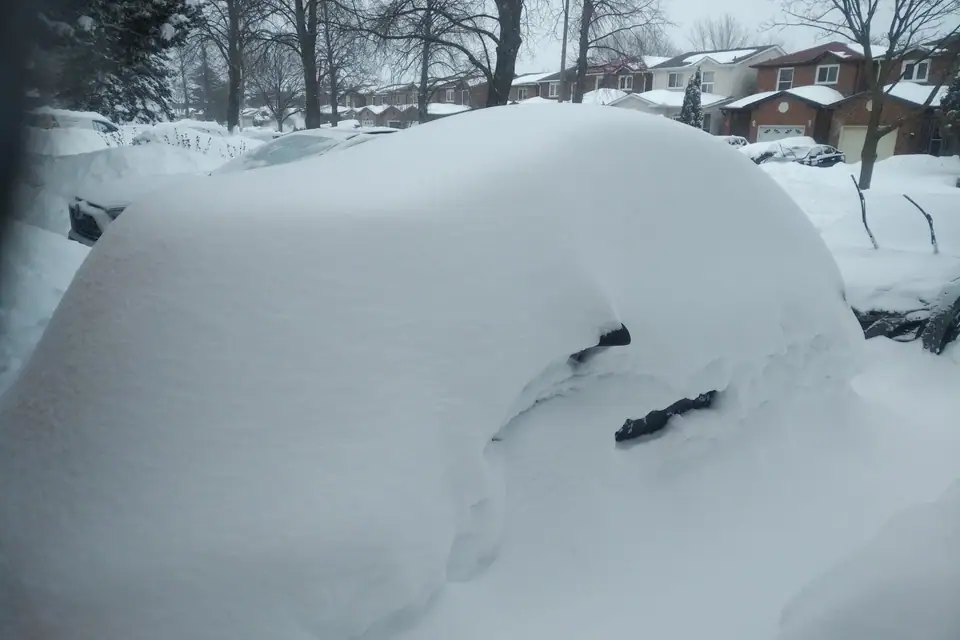
Ready.gov’s instruction is simple: if you are trapped in your car, stay inside. NHTSA says to stay with the car and not overexert yourself. The NWS explains why: people who leave their vehicle become disoriented quickly in wind-driven snow and cold.
Carbon monoxide
NHTSA says to make sure your exhaust pipe is clear of snow and to run your car only sporadically, just long enough to stay warm, and not for long periods or in an enclosed space. The NWS says to run the motor about 10 minutes each hour and to clear snow from the exhaust pipe to avoid poisoning. Read more in our carbon monoxide safety guide.
After the storm, the NWS gives two more steps before you drive off. Check that the exhaust pipe is clear, and brush all the snow off the car so it does not slide onto your windshield or fly onto other cars.
How do you get the car itself ready for winter?
A kit helps only if the car starts. NHTSA’s checklist covers the basics:
- Tires. Pressure drops as temperatures fall. Fill to the pressure on the driver’s door frame label, not the maximum printed on the tire. NHTSA says tread should be at least 2/32 of an inch on all tires.
- Battery. Cold weather cuts battery power. NHTSA suggests having a mechanic check the battery and charging system.
- Wipers and fluid. Keep the reservoir full of winter fluid with de-icer and replace worn blades.
- Fuel. Keep the tank close to full whenever possible. Ready.gov adds that a full tank also keeps the fuel line from freezing. For electric vehicles, NHTSA says plugging in at night helps keep the battery in its best temperature range.
NHTSA also has a winter note for parents: heavy coats can interfere with car seat harness fit, so use thin, warm layers and put blankets over the child after the harness is snug.
Should you buy a ready-made kit or build your own?
Either works. A prebuilt winter kit saves time, but compare its contents against the table above before you rely on it. Water, snacks and medicine are personal or need replacing, so plan to add and refresh those yourself. An ice scraper and emergency blankets are the easiest pieces to add to a kit you already have.
Winter car kits, ice scrapers and emergency blankets
Live listings, shown by eBay
Opens eBay in a new tab. Check condition, seller feedback and returns.
A compact car kit also makes a practical present for a student driving home for the holidays. Our winter storm gifts guide has more ideas sorted by the person. The home checklist is in the prepare section.
Frequently asked questions
What is the most important thing to keep in your car in winter?
No single item covers everything, but every official list includes blankets, a way to charge your phone and jumper or booster cables. NHTSA, Ready.gov and the NWS also list sand or cat litter for traction when a car is stuck.
How long can you run your car to stay warm if stranded?
The National Weather Service says to run the motor about 10 minutes each hour for heat and to clear snow from the exhaust pipe. NHTSA says to run the car only sporadically, just long enough to stay warm.
Should you leave your car in a snowstorm to find help?
No. Ready.gov and NHTSA both say to stay with the car. The NWS warns that people who leave their vehicle become disoriented quickly in wind-driven snow and cold.
Are tire socks legal where chains are required?
It depends on the state and the product. Colorado's chain law, for example, requires chains or an approved alternative traction device, so check your state transportation department's rules before relying on tire socks.
Should kids wear winter coats in car seats?
NHTSA says heavy coats can interfere with the harness fit. It suggests thin, warm layers, with blankets or coats placed over the child after the harness is snug.
Sources
- Winter Weather Driving TipsNational Highway Traffic Safety Administration
- Car SafetyReady.gov (FEMA)
- Winter WeatherReady.gov (FEMA)
- Before a Winter StormNational Weather Service
- During a Winter StormNational Weather Service
- After a Winter StormNational Weather Service
- Winter Weather SafetyCenters for Disease Control and Prevention
- Passenger Vehicle Traction and Chain LawsColorado Department of Transportation
Filed under On the roadPart of Prepare for a Winter Storm: Home and Car Checklists